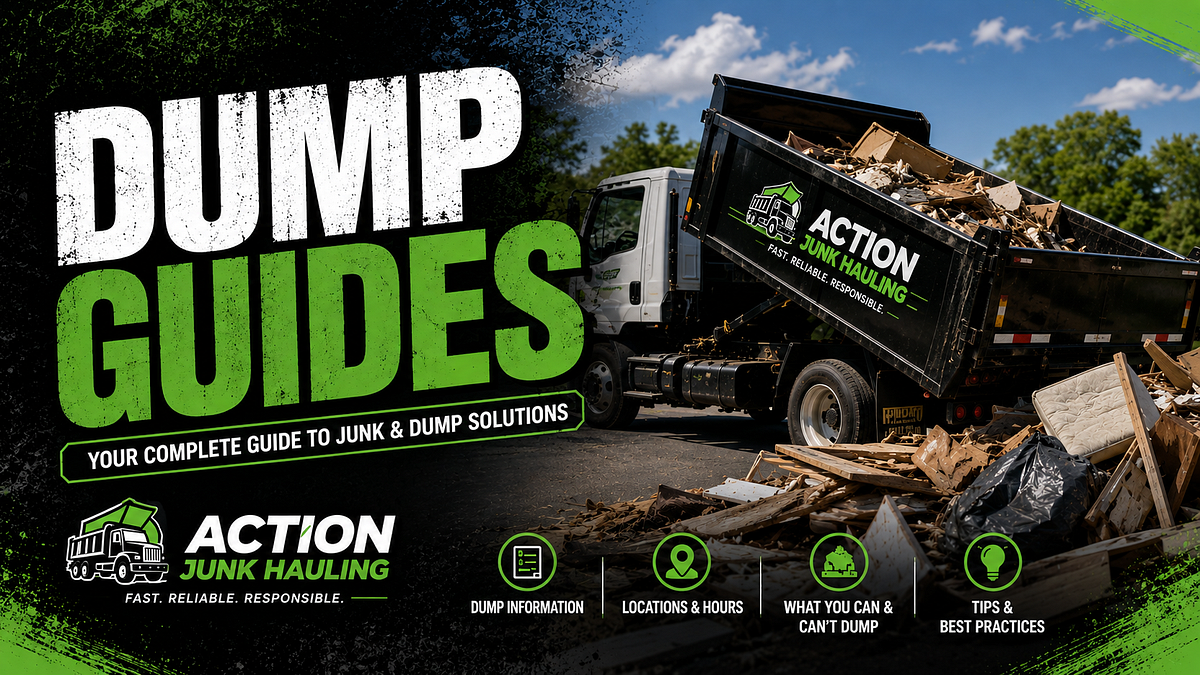
Getting rid of unwanted items can seem simple until you have a garage full of old furniture, a yard covered with debris, or a home cleanout that produces more waste than expected. Many homeowners start searching for local dump information because they want to understand where their junk can go, what disposal options are available, and how much time and effort the process may require. This is where reliable dump guides can make the process easier. A good dump guide explains the basic disposal process while also helping homeowners understand when hauling junk themselves makes sense and when professional junk removal may be a better option.
For homeowners in Washington and Oregon, understanding local disposal options is especially useful because different communities can have different facilities, rules, fees, and accepted materials. Action Junk Hauling provides junk removal and related services across numerous communities in these states, including Tacoma, Seattle, Shoreline, SeaTac, Lynnwood, and other surrounding areas. Its existing dump guide resources focus on helping people understand local disposal options and the practical factors involved in handling junk.
What Are Dump Guides and Why Are They Useful?
Dump guides are informational resources designed to help people understand the process of disposing of unwanted materials. Instead of simply telling someone to take their junk to a dump, a useful guide explains the decisions that need to be made before loading a vehicle and heading to a disposal facility. This can include understanding the type of material, choosing an appropriate disposal location, checking operating information, considering possible fees, and deciding whether a personal vehicle or professional hauling service is the better choice.
The value of a dump guide becomes clearer when a project involves a large amount of material. A few household items may fit easily into a car or pickup truck, but a complete garage cleanout, remodeling project, estate cleanout, or property cleanup can create a much larger load. In those situations, transportation, loading, unloading, fuel, disposal charges, and personal time all become part of the project.
A detailed guide can therefore help homeowners look at the entire process instead of focusing only on the final disposal location. The cheapest option on paper may not always be the easiest option once transportation and labor are included.
Understanding Your Local Dump Options
One of the first things to understand when planning a junk disposal project is that not every disposal facility handles the same materials. Transfer stations, recycling facilities, landfills, and specialized disposal centers may each have different requirements. Some locations may accept general household waste while other materials may need to be handled through a specific facility or program.
Local information is also important because operating hours, accepted materials, and disposal costs can change. A homeowner who finds an old online listing may arrive at a facility only to discover that the information is no longer current. Checking the latest available information before starting the trip can help avoid unnecessary delays.
Action Junk Hauling dump guide section provides location-specific resources for communities throughout Washington and Oregon. The existing collection includes guides for areas such as Tacoma, Shoreline, Seattle, Mercer Island, SeaTac, and Lynnwood, showing how local information can be more useful than a general disposal guide that treats every city the same.
What Should You Consider Before Going to a Dump?
Before loading a vehicle, it is helpful to understand exactly what needs to be removed. A small pile of household junk is very different from construction debris, yard waste, appliances, furniture, or a complete property cleanout. Knowing the type and approximate volume of material can help determine the most practical disposal method.
Transportation is another important consideration. If you are planning to handle the project yourself, you need a vehicle that can safely carry the load. Some homeowners use a pickup truck, trailer, or rented truck for larger projects. However, vehicle rental adds another step to the process because the vehicle has to be collected, loaded, driven to the disposal facility, unloaded, and returned.
Time is also part of the cost of a DIY disposal project. Loading heavy furniture or debris can take several hours, especially when items need to be carried from different parts of a property. The trip to the disposal facility, waiting time, unloading, and return journey can make a seemingly simple project much longer than expected.
Dump Fees and the True Cost of DIY Disposal
Many people begin a dump search by asking one question: how much does it cost? Disposal fees are important, but they are only one part of the total cost. A complete comparison should also consider fuel, truck or trailer rental, labor, loading equipment, and the time required to complete the project.
For example, a homeowner may have only a modest amount of junk but may still need to rent a larger vehicle because the items cannot fit in a personal car. Once the rental and fuel costs are added, the difference between DIY disposal and professional hauling may become smaller than expected.
Fees can also depend on the type and amount of material being disposed of. Because disposal policies and pricing can change, homeowners should verify current information directly with the relevant local facility before making a trip. A local dump guide can help identify the questions that should be answered before the project begins.
Knowing What You Can and Cannot Dispose Of
One of the most important parts of responsible junk disposal is understanding that different materials may require different handling. Household furniture, mattresses, appliances, electronics, yard waste, construction debris, and other materials may not always follow the same disposal process.
Action Junk Hauling's service categories reflect the wide range of materials that can be involved in residential and commercial cleanup projects. Its website lists services related to appliances, bicycles, carpet, car parts, electronics, furniture, mattresses, televisions, refrigerators, tires, yard waste, couches, concrete, brick, dirt, soil, and construction debris.
This does not mean every item should automatically be taken to the same dump. Instead, homeowners should identify the material first and then determine the appropriate disposal or recycling route. When in doubt, checking with the disposal facility or a professional hauling company can prevent problems.
When Professional Junk Removal Makes More Sense
DIY disposal can work well when the amount of junk is small and the homeowner has the right vehicle and enough time to complete the job. Larger projects are different. Moving heavy furniture, appliances, construction debris, or large quantities of household waste can require significant physical effort.
Professional junk removal can simplify this process because the homeowner does not have to organize the entire transportation process alone. Instead of renting a truck, loading everything, driving to a disposal facility, unloading the material, and returning the vehicle, the homeowner can arrange for a junk removal team to handle the hauling process.
Action Junk Hauling describes itself as a professional junk removal company and provides residential, commercial, property, and same-day junk removal services. The company also offers several types of cleanouts, including garage, attic, office, storage unit, estate, foreclosure, moving, eviction, rental unit, shed, and other property-related cleanouts.
Dump Guides for Home Cleanouts
Home cleanouts are one of the situations where a detailed dump guide can be particularly helpful. Moving, renovating, selling a property, preparing a rental unit, or clearing an inherited home can produce a large amount of unwanted material.
During a cleanout, people often find a mixture of furniture, boxes, old household goods, appliances, electronics, and general debris. Trying to handle everything in a single vehicle may not be practical. It can also be difficult to determine which items should be donated, recycled, reused, or disposed of.
A better approach is to first separate the items by type and condition. Reusable items may have another purpose, while recyclable materials may have a different disposal route. Items that are no longer usable can then be evaluated for appropriate disposal or professional junk removal.
Dump Guides for Construction Debris
Construction and renovation projects create another type of disposal challenge. Remodeling a kitchen, bathroom, garage, deck, patio, or other part of a property can generate materials such as wood, concrete, brick, flooring, drywall, fixtures, and other debris.
Construction debris can be heavy and difficult to transport in a standard vehicle. It may also require different handling from ordinary household junk. Action Junk Hauling specifically lists construction debris removal along with concrete and brick removal, dirt and soil removal, and demolition-related services.
For homeowners and contractors, understanding disposal requirements before starting a project can make cleanup easier. Planning the disposal process at the same time as the renovation can prevent debris from accumulating for weeks after the work is finished.
Dump Guides for Furniture and Large Household Items
Large household items are among the most common reasons people search for disposal information. Old couches, mattresses, refrigerators, televisions, tables, cabinets, and other furniture can be difficult to move without proper equipment.
Leaving these items outside for an extended period is usually not an ideal solution. They can take up valuable space and may become difficult to move later. A planned removal process allows homeowners to clear the property efficiently.
Professional hauling can be especially useful when large items need to be carried down stairs, removed from garages, or transported from another part of a property. Instead of arranging multiple trips, homeowners can look for a service that handles larger household items as part of a broader junk removal project.
Dump Guides for Garage and Yard Cleanup
Garages often become storage areas for things that are no longer used. Over time, old tools, broken equipment, furniture, boxes, seasonal items, and miscellaneous household junk can make the space difficult to use.
A garage cleanup usually starts with sorting. Items that are still useful can be kept or donated, while damaged or unwanted items can be prepared for removal. Once the unwanted material is separated, homeowners can estimate how much space it will occupy and decide whether they can transport it themselves.
Outdoor projects can create similar challenges. Yard cleanup may involve branches, old outdoor furniture, soil, broken structures, and other unwanted material. Action Junk Hauling lists yard waste pickup as one of its services, along with shed cleanouts and demolition-related services.
How to Make Junk Disposal More Efficient
Good preparation can make almost any junk disposal project easier. Before moving anything, homeowners should identify what is being removed and estimate the size of the load. This makes it easier to compare DIY transportation with professional hauling.
It is also helpful to avoid mixing materials without understanding disposal requirements. Some items may need special handling, while others may be accepted through ordinary waste or recycling channels. Keeping materials organized can make the final disposal process more efficient.
Another useful step is to check local information before loading the vehicle. Confirming the facility's current operating hours, accepted materials, and applicable fees can prevent an unnecessary trip. Local dump guides are valuable because they bring these considerations together in one place.
Choosing Between DIY Dumping and Junk Removal
There is no single disposal method that works for every project. DIY dumping can be practical for a small load when the homeowner already has a suitable vehicle and enough time. It can also give homeowners direct control over how the material is transported and disposed of.
Professional junk removal can be more convenient when the project involves heavy items, a large quantity of material, difficult access, or a tight schedule. The decision should be based on the complete project rather than only the advertised disposal fee.
Homeowners should consider the amount of material, the type of items, transportation requirements, physical effort, available time, and local disposal rules. Looking at all of these factors provides a more realistic comparison.
Finding Reliable Dump Information Near You
Searching for a dump near your location is often the first step in a disposal project, but search results alone may not answer every question. A reliable dump guide should help you understand the local options and the practical issues that come with transporting junk.
Location-specific guides are particularly useful because disposal information can vary between communities. Action Junk Hauling maintains local resources for numerous Washington and Oregon locations, including Tacoma, Seattle, Shoreline, SeaTac, Lynnwood, and many other service areas.
If you are searching for local disposal information, start by identifying your city and the type of material you need to remove. Then verify the latest facility information before making a trip. For larger projects, compare the total DIY cost with the convenience of professional junk hauling.
Final Thoughts on Dump Guides
Dump guides are useful because they turn a potentially confusing disposal project into a more manageable process. Whether you are cleaning a garage, preparing for a move, renovating a property, removing old furniture, or dealing with construction debris, understanding your disposal options before starting can save time and effort.
The most important thing is to look beyond the basic question of where to take junk. Consider what materials you have, how much space they require, how they will be transported, what disposal requirements may apply, and whether handling the project yourself is actually the most convenient choice.
For smaller loads, DIY disposal may be a reasonable solution. For larger cleanouts, heavy materials, construction debris, or projects that require significant labor, professional junk removal may provide a simpler alternative. Action Junk Hauling offers junk removal, cleanout, demolition, dumpster rental, and debris removal services across a wide range of communities in Washington and Oregon, making professional assistance an option for homeowners and property owners who do not want to manage the entire hauling process themselves.
Ultimately, the best dump guide is one that helps you make an informed decision. By checking local information, understanding the materials involved, estimating the real cost of transportation, and choosing the right disposal method, you can make your cleanup project more organized and efficient. Whether you choose to handle a small load yourself or bring in a professional junk hauling company for a larger project, proper planning is the key to responsible junk disposal.